July 29, 2025 / Aging, Workforce

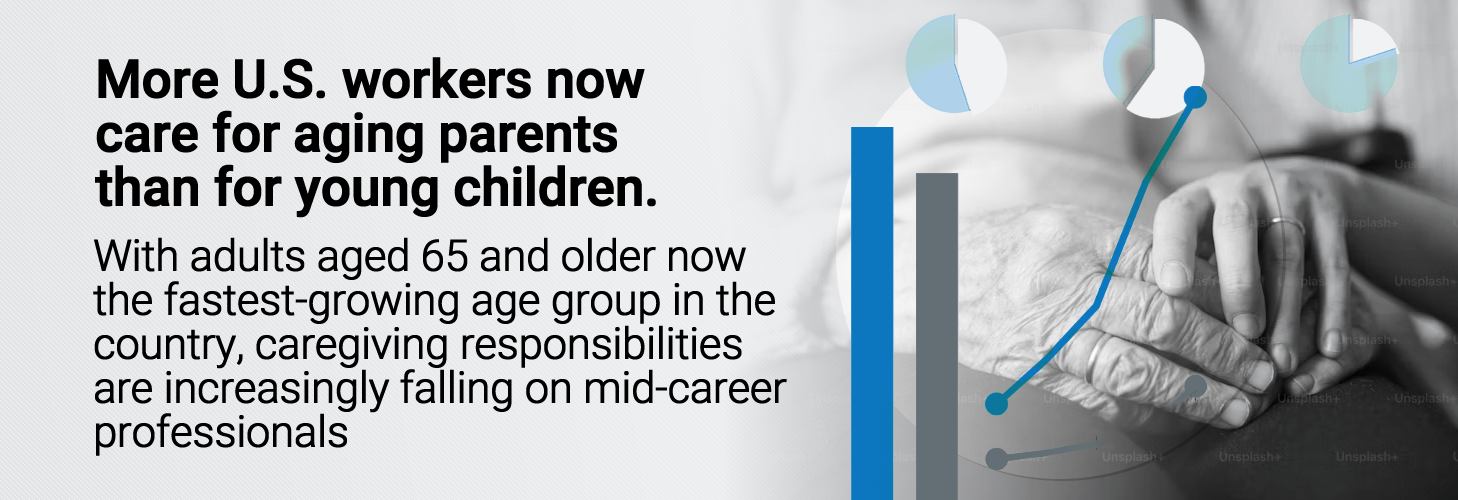
More U.S. workers now care for aging parents than for young children.Image

For the first time in U.S. history, more working adults are caring for aging parents than for young children. Nearly 23 million people in the workforce now provide eldercare, surpassing the 21 million caring for preschoolers. This shift, highlighted in a recent Harvard Business Review article, marks a major turning point for families, workplaces, and public policy.

With adults aged 65 and older now the fastest-growing age group in the country, caregiving responsibilities are increasingly falling on mid-career professionals, many of whom are at the height of their earnings and leadership roles.

Key takeaways:

  • Eldercare now exceeds childcare among working adults, with 23 million workers caring for an aging parent.

  • 14% of the U.S. workforce are elder caregivers—and that number is growing quickly.

  • Nearly half (45%) of these caregivers are between ages 45–64, often juggling career and family responsibilities at once.

  • 92% of surveyed elder caregivers say they want more support from their employers.

  • Georgia and other states still have time to modernize “two-gen” workforce and family programs to include eldercare—not just childcare.

Read the article here.

January 10, 2022 / Aging, Education, Equity

GPEE recently released their list of ten issues to watch in 2022 with the goal of ensuring 65% of GA’s residents aged 25-64 will hold a postsecondary credential by 2032.Insight

Georgia Partnership for Excellence in Education (GPEE) recently released their report listing the top ten issues to watch in 2022. The report highlights the lasting effects of the pandemic on education, especially for Georgia’s most vulnerable populations including students of color, low-income youth, rural residents, workers lacking postsecondary training, and adults caring for children and elders. GPEE is focusing on equity as the state recovers from the pandemic, and the list of ten issues to watch serves as a starting point for GPEE’s goal of ensuring 65% of GA’s residents aged 25-64 will hold a postsecondary credential by 2032. The ten issues are:

  1. Equity – Shifting Mindset and Strategy
  2. Unfinished Instruction – Equity through Acceleration
  3. Non-Academic Barriers – The School’s Role
  4. Improving School Culture – The Imperative of School Leaders
  5. Funding – School Transformation on a Deadline
  6. Accountability – What’s the Future?
  7. Early Learning – Protecting Investments in Early Learners
  8. Revamping the Teaching Profession – A New Moonshot
  9. Workforce Readiness – A Strategy that Pays Off
  10. Rural Transformation – From the Inside Out
March 5, 2021 / Aging, Health, Policy

Quote

Based on the covid-19’s impact and national demographic and demand trends, the National Association of Area Agencies on Aging (N4A) urges leaders to consider the following principles in policymaking:

  • People want to age safely in their homes and communities.
  • Health happens in the home and community.
  • We are only as strong as our caregivers.
  • Community infrastructure is a critical component of healthy aging.
  • We are all stakeholders in an aging nation.