Cuts to Federal Funding Could Deepen Poverty in Rural and Low-Income Georgia
A new analysis from the Georgia Budget and Policy Institute (GBPI) warns that proposed federal budget cuts could severely harm rural communities, low-income families, immigrants, and Georgians of color. Federal programs that help close long-standing gaps in access to health care, education, food, and economic security are now at risk as Congress debates budget reconciliation and appropriations bills ahead of a September 30, 2025 deadline.
Cuts to vital programs like SNAP, education funding, and rural health care are expected to hit hardest in Georgia’s poorest and most vulnerable communities, exacerbating hunger, poverty, and inequality across the state.
Key Takeaways:
-
Georgia ranks 14th in U.S. poverty rates, putting its rural and low-income populations at greater risk if federal funding is slashed.
-
Over 15% of Georgians living in poverty are either Black, Latino, or under 18, meaning federal cuts would disproportionately harm these communities.
-
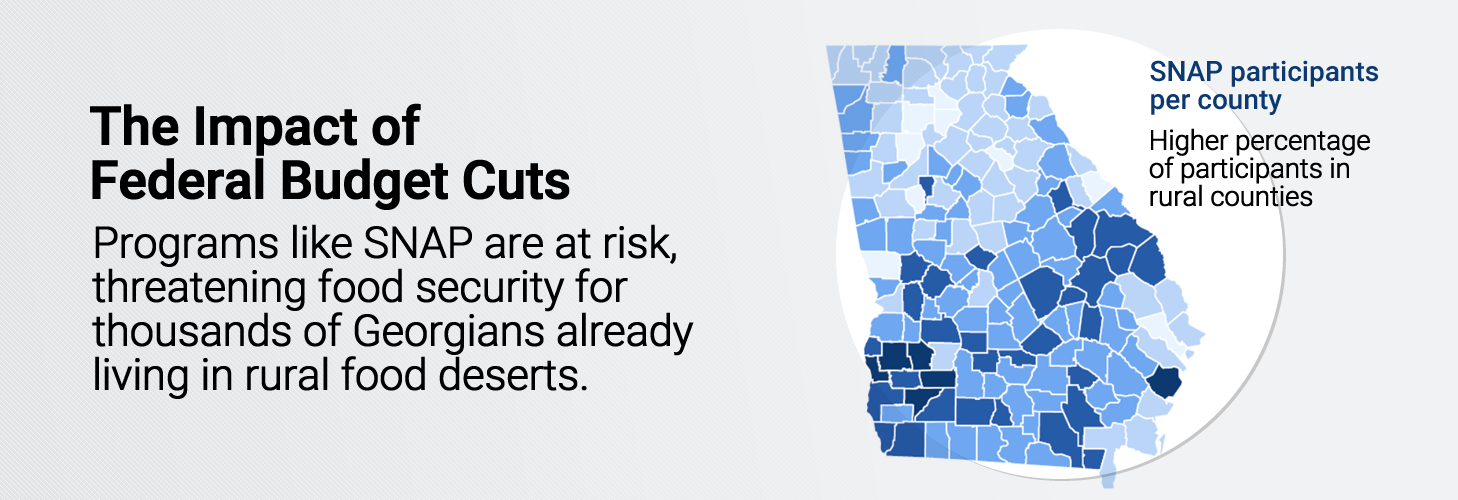
Programs like SNAP are at risk, threatening food security for thousands of Georgians already living in rural food deserts.
-
Cuts could cost thousands of jobs statewide, particularly in education, health care, and social services sectors.
-
Tracking federal spending impacts is becoming harder, as the administration reduces public data availability, weakening transparency and accountability.
Read the full report here.