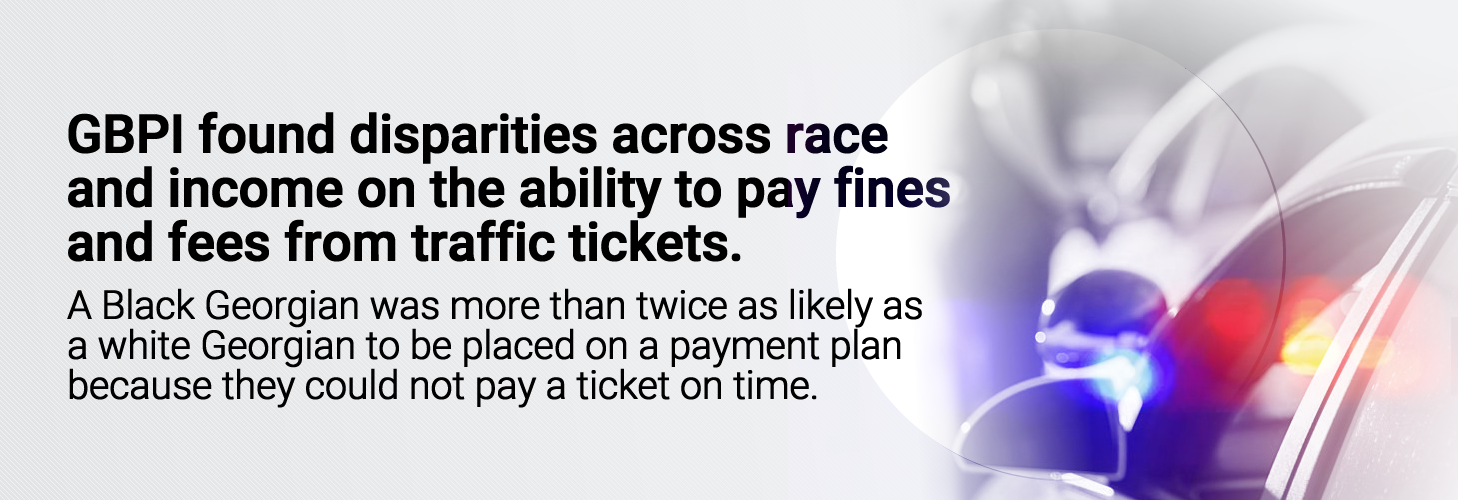
GBPI found disparities across race and income on the ability to pay fines and fees from traffic tickets
Excessive reliance on fines and fees by local governments creates lasting barriers to economic security, particularly for Black Georgians and low-income individuals. The resulting debt can limit access to stable work, housing, and economic opportunities while increasing entanglement with the criminal legal system.
A survey conducted by the University of Georgia’s SPIA Survey Research Center on September 11, 2024, for the Georgia Budget & Policy Institute (GBPI), collected data to better understand the impact of everyday dynamics and historical discrimination on Black communities, which have led to overpolicing and the erosion of their income and wealth.
Statewide trends:
- Nearly 15% of all Georgians have been unable to afford a traffic ticket at some point in their lives, with the rate rising to over 20% for Black Georgians and those earning $15,000–$49,000 per year.
- Black Georgians are more than twice as likely as white Georgians to be placed on a payment plan for a traffic ticket they couldn’t pay on time.
- Georgians of color are more likely to go into debt or face legal consequences, including criminal records, jail time, and misdemeanor probation, due to unpaid traffic tickets.