Skip to content

Neighborhood NexusNeighborhood Nexus

Toggle Navigation
  • Maps & Data
    • DataNexus
    • Real-Time Insights
    • Dashboards
    • Profiles
    • 33°n blog
    • Data Primers
  • Community
  • Data Maturity
  • About
  • Donate

Real-Time Insights

The only way to understand and plan for our most critical and emerging issues is to keep each other informed. Send insights to tpearce@atlantaregional.org.

August 25, 2025 / Civic Engagement, General

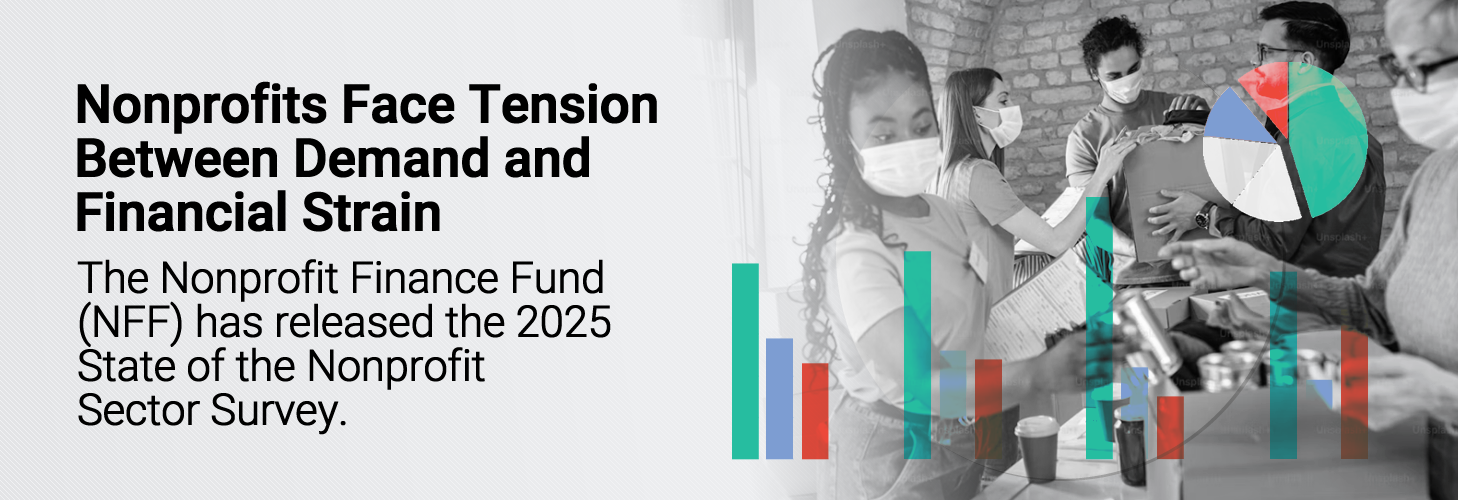
Nonprofits Face Rising Demand Amid Shrinking Financial StabilityImage

The Nonprofit Finance Fund (NFF) has released the 2025 State of the Nonprofit Sector Survey. This year’s report draws on responses from 2,206 nonprofits nationwide, providing a rare, detailed look into their programmatic, operational, and financial health from 2024.

The survey tracks both the pressures nonprofits face—like rising service demand, inflation, and funding instability—and the investments needed to secure their long-term futures. For policymakers, funders, and nonprofit leaders alike, the findings serve as a guide for smarter decisions about how to strengthen the organizations that make up our community infrastructure.

Key insights:

  • Tension between demand and financial strain: 36% ended 2024 with an operating deficit—the highest in a decade of survey data. 86% say inflation has hurt their organizations and the people they serve.
  • Nonprofits as economic engines under pressure: Only 41% can pay all full-time staff a living wage.
  • Deep community roots and adaptive responses: 62% focus on building community wealth and well-being; 54% prioritize tackling economic inequality.

Read the full report here.

August 22, 2025 / Civic Engagement

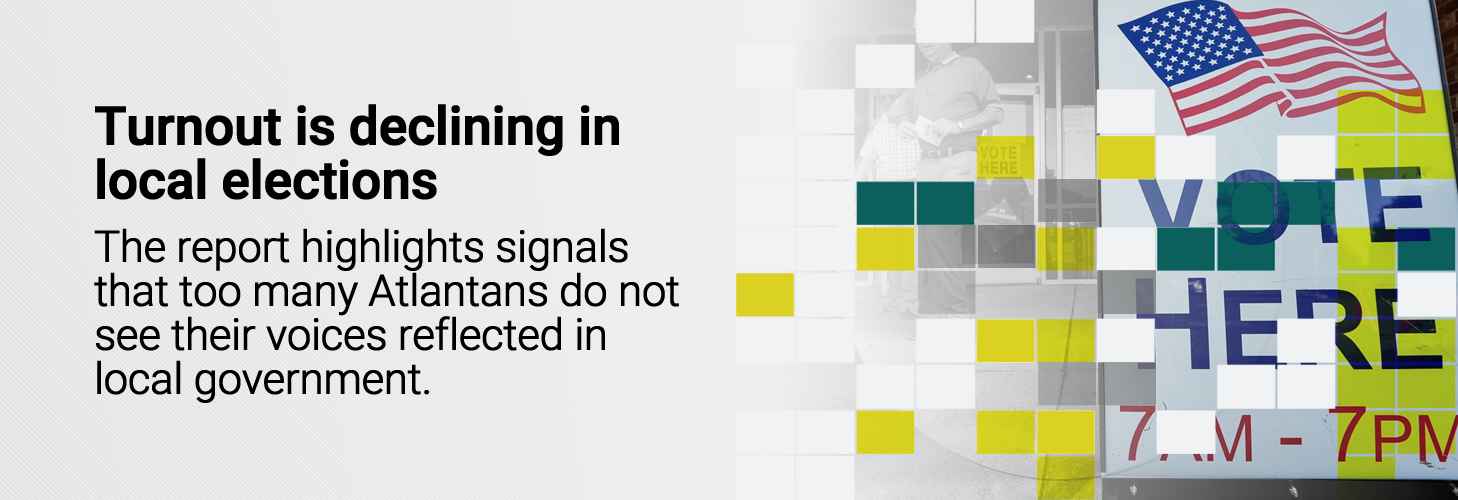
Atlanta’s Local Elections Are Losing VotersImage

The Center for Civic Innovation’s (CCI) recent Voter Analysis Report aims to help better understand who votes in municipal elections, and who doesn’t. Atlanta has long been a symbol of civic leadership and voting rights progress; yet today, local voter turnout seems to tell a different story.

The report highlights signals that too many Atlantans do not see their voices reflected in local government, don’t feel their participation matters, or lack the information to engage.

Key takeaways from the report:

  • Turnout is declining in local elections. Since 1981, participation in Atlanta mayoral races has trended downward, even as turnout in presidential and midterm elections has risen.

  • Representation gaps are persistent. Young voters and Black voters are consistently underrepresented in local contests.

  • Data challenges limit progress. Inconsistent formatting, incomplete reporting, and discrepancies in how Atlanta’s election data is shared make analysis difficult.

  • Proactive use of data is critical. Election data shouldn’t only be studied after the fact; it should drive bold, forward-looking voter education and engagement strategies before ballots are cast.

Read the full report here.

July 29, 2025 / Civic Engagement, General

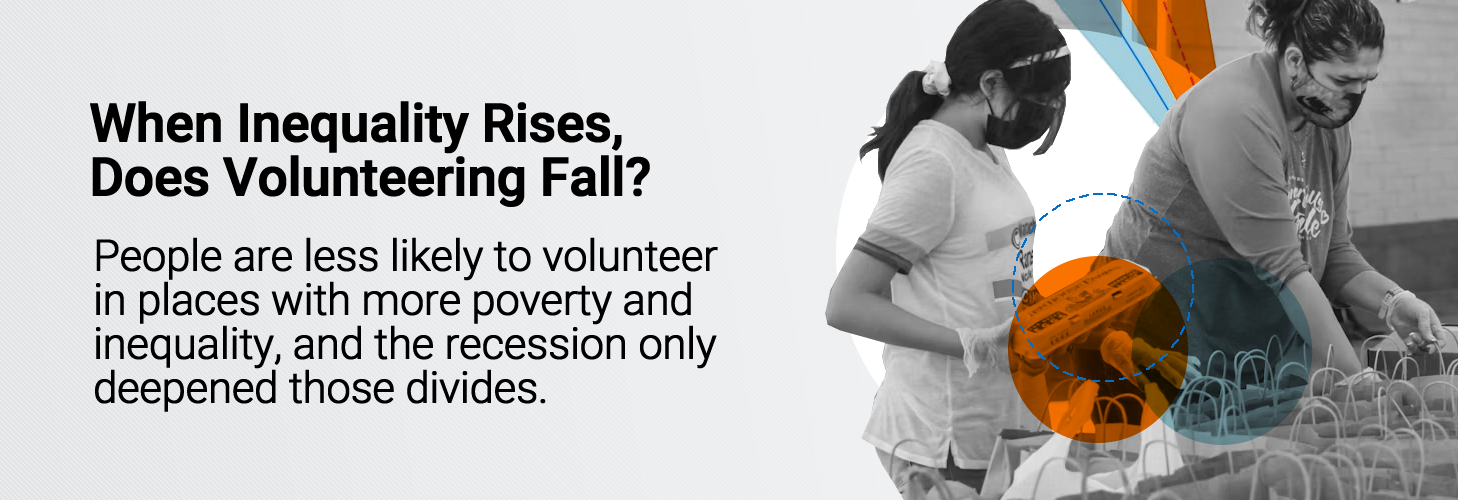
When Inequality Rises, Does Volunteering Fall?Image

Drawing on over a decade of data from the Current Population Survey’s Volunteering Supplement (2002–2015), a new study investigates how both local and national economic conditions shape individual decisions to volunteer. Researchers examined three indicators of local economic context—poverty rates, income inequality, and economic growth—and also considered the national shock of the Great Recession.

Volunteering is often seen as a local solution during times of need. This study shows that when economic hardship hits, it may actually erode the capacity for local, volunteer-led responses, particularly in communities already facing disadvantage.

Key takeaways:

  • Disadvantage and inequality suppress volunteerism. People living in communities with higher poverty and greater income inequality are less likely to volunteer than those in more economically stable, equitable areas.

  • Recession impacts weren’t equal. The Great Recession dampened volunteering overall—but most sharply in communities with stronger pre-recession growth and more income equality, suggesting that sudden shocks may undermine civic behavior even in better-off areas.

  • Rural volunteerism has declined. Prior to the recession, rural residents were more likely to volunteer than their urban counterparts. After the recession, that gap disappeared—another sign of how deeply economic disruptions have affected community participation, even in places traditionally seen as civic strongholds.

As policymakers and community organizations increasingly rely on volunteers to meet growing social needs, understanding how economic context shapes civic behavior is more urgent than ever.

Read the publication here.

November 25, 2024 / Basic Needs, Civic Engagement, Commuting, Economics, Environment, Equity, General, Housing, Workforce

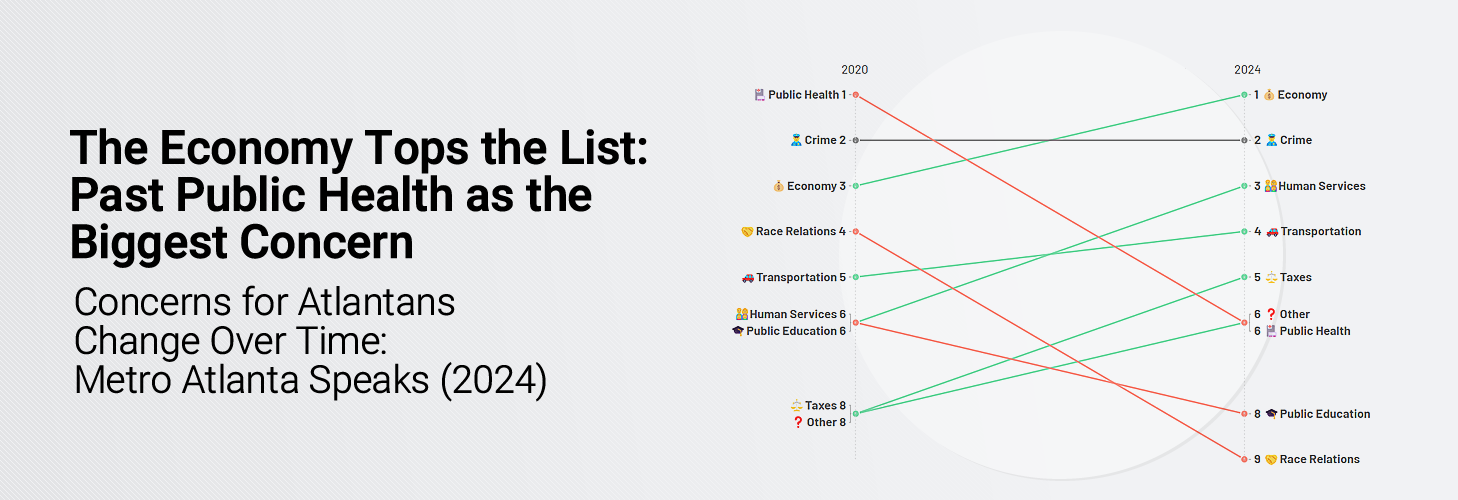
The economy ranked as the issue of highest concern for Metro AtlantansImage

The Atlanta Regional Commission (ARC) released the results of the 2024 Metro Atlanta Speaks (MAS) survey. MAS provides valuable and statistically significant resident perception and attitude data down to the county level.

Here are some key takeaways:

  • The Economy Tops the List: The economy remains the most pressing concern for metro Atlantans, followed by crime and human services.
  • Crime Stays a Priority: Crime has consistently ranked as the second-most important issue since 2016.
  • Shifts in Focus: Public health and race relations, which previously ranked higher, have dropped to sixth and ninth places, respectively.

The hybrid phone and online survey asked 21 questions to thousands of residents of the 11 counties in ARC.

Read more here.

January 12, 2024 / Civic Engagement

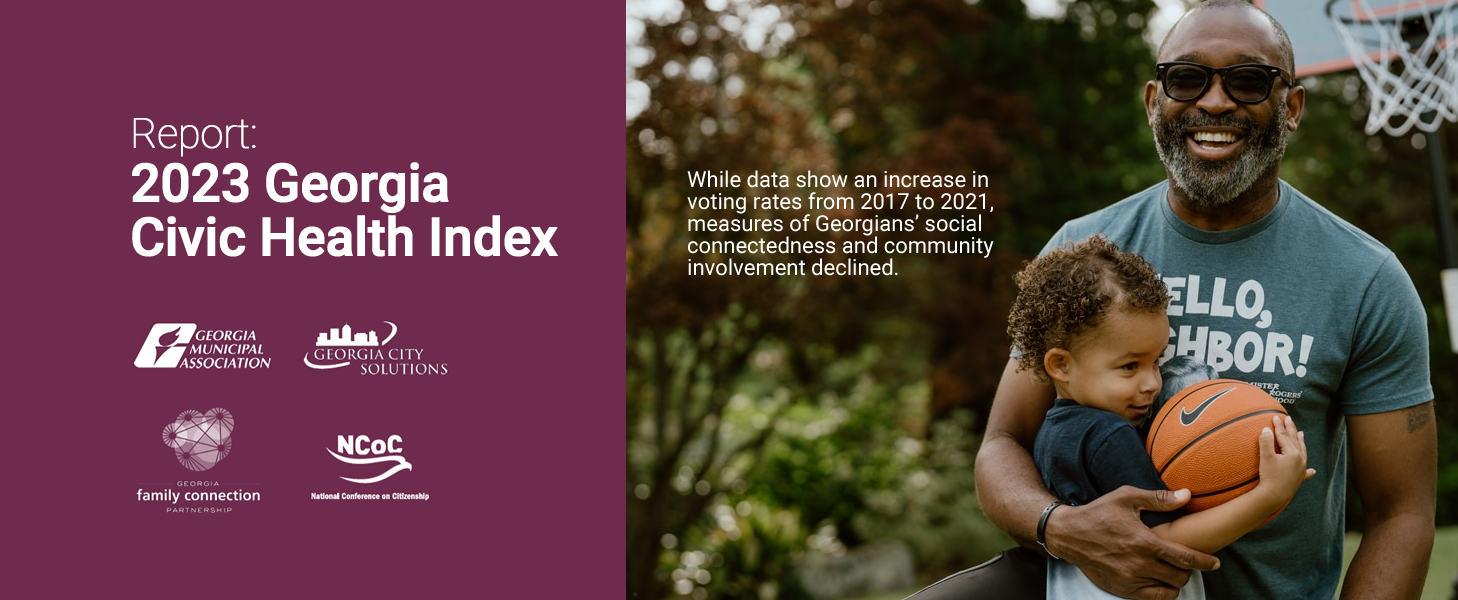
Georgians political action measures increased, while social connectedness and community involvement declined.Image

The 2023 Georgia Civic Health Index (CHI) examines civic engagement measures and explores the way Georgians interact with each other, their communities, and in political life under four main areas of civic health: social connectedness, community involvement, political action, and confidence in institutions.

The third edition of the report was published in December by the Georgia Family Connection Partnership (GaFCP), the Georgia Municipal Association (GMA), Georgia City Solutions, and the National Conference on Citizenship (NCoC).

Although Georgia continues to struggle with its civic health, lagging the national averages across most measures, the state measures on par or better than the rest of the nation in eight indicators, which suggests promising opportunities for our state.

Here are some key takeaways:

  • While data show an increase in voting rates from 2017 to 2021, Georgians’ social connectedness and community involvement measures declined.
  • Georgia ranks lowest in the nation in frequently talking with or spending time with neighbors and frequently reading, watching, or listening to news or information about political, societal, or local issues.
  • Only 7.7% of Georgians reported they frequently do favors for neighbors compared to 10% nationally.
  • While Georgia ranked 37th in the nation for voter registration and voting in the 2019 edition of the CHI, our state ranks 33rd in voter registration and 29th in voting in the 2023 report.
  • Though our national ranking improved, the percent of registered voters increased only slightly from 69.4% in 2017 to 70.7% in 2021.
  • Georgia ranked 35th in the nation in contacting public officials—up from 49th in the 2019 CHI.
  • 8.2 percent of Georgia’s residents report attending a public meeting, which ranks our state 32nd in the nation.

Read the full report here.

December 15, 2023 / Basic Needs, Civic Engagement, Economics, Equity, Hispanic, Immigration, Inflation

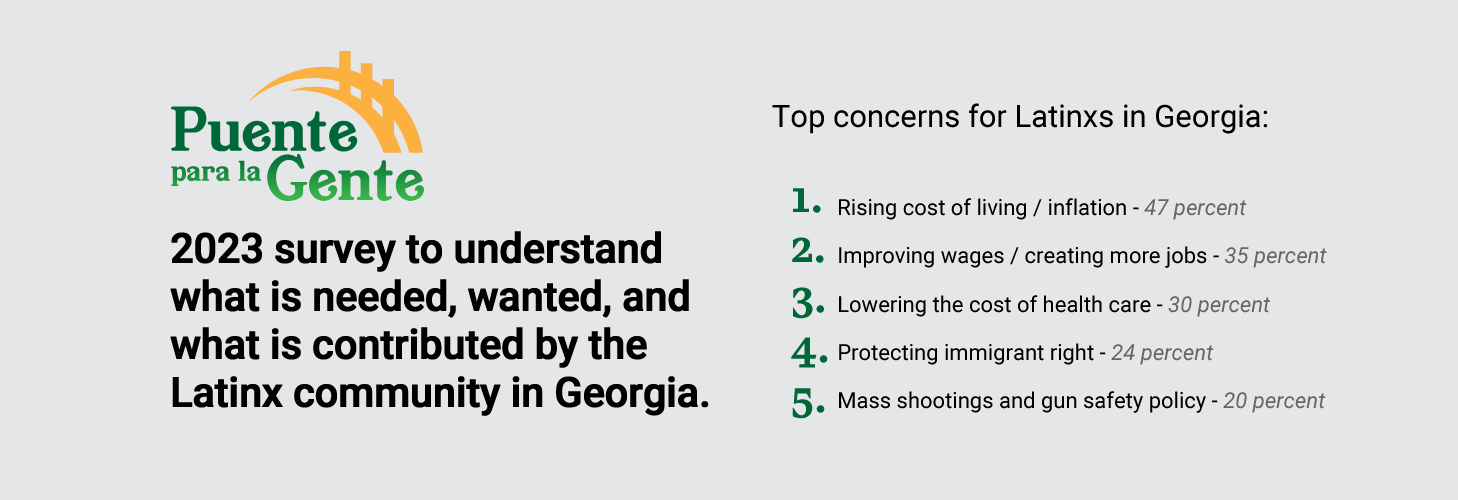
Inflation and cost of living ranked as top concern for Latinos in GeorgiaImage

Puente para la Gente is an initiative from GALEO, GALEO Impact Fund, the Latinx Alliance, and other organizations to encourage participation all over Georgia. The 2023 survey, curated by BSP Research, captured what is needed, wanted, and what is contributed by the Latinx community.

Key takeaways:

  • Nearly half of Latinos in Georgia cite inflation and cost of living (47%) as the most important issue to address, followed by improving wages and jobs (35%) and lowering the cost of health care (30%).
  • 17% cited women’s reproductive rights and abortion rights as a top issue in the community and 71% of Latinos said they strongly support passing a law guaranteeing access to abortion for people who need it.
  • A large majority of respondents expressed support for policies to improve access to higher education regardless of immigration status, safeguarding voting rights for all Americans, and affordable housing and renters’ rights.
  • At least half of the respondents had to postpone medical care due to economic hardships. Other reasons for economic distress were the need to have a second job or side hustle and postponing paying certain bills.
  • Climate change and other environmental issues are issues of great concern for respondents.

See the detailed results of the survey and the press conference here.

October 27, 2023 / Basic Needs, Civic Engagement, Commuting, Economics, Environment, Equity, General, Housing, Workforce

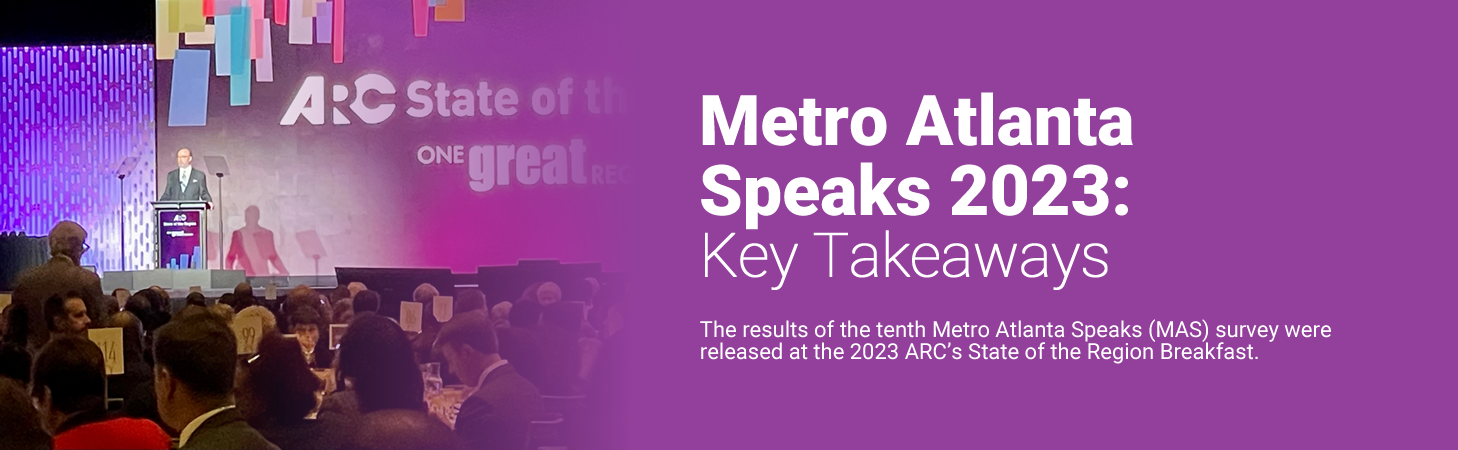
Metro Atlanta Speaks 2023: “Crime” still rated as the biggest issue facing the regionImage

The Atlanta Regional Commission (ARC) released the results of the tenth Metro Atlanta Speaks (MAS) survey. MAS provides valuable and statistically significant resident perception and attitude data down to the county level.

Here are some key takeaways:

  • Like in 2021, respondents rated “Crime” as the biggest issue facing the region.
  • Only 46 percent of respondents support“pay{ing} more in taxes to fund expanded regional public transit that includes buses and rail”.
  • More than 63 percent of respondents either agreed or strongly agreed that they COULD NOT afford to move to another housing unit in the neighborhood where they currently live.
  • Around 28 percent of respondents would not be able to pay for a $400 emergency without borrowing money, selling something or simply not paying at all.
  • Just over nine percent of respondents indicated that they currently own an electric vehicle (slightly higher than national averages).
  • Nearly a third of respondents said they plan to buy an EV in the next five years.
  • Those saying that living conditions in the region will be better in the next 3-4 years has declined in recent years, however there is more optimism among Black and Latino respondents than white respondents.

The hybrid phone and online survey asked 21 questions to 4,850 residents of the 11 counties in ARC.

Read more here.

August 31, 2023 / Civic Engagement

Low- and high-income Americans come together in public parks, libraries, and… Olive GardenImage

In a recent study, Maxim Massenhoff and Nathan Wilmers of the Naval Postgraduate School and Harvard University used SafeGraph mobile location data to determine where Americans of different classes are more likely to meet. In general, Americans are pretty isolated. Their study shows that:

  • Americans are even less likely to mix with people from different socio-economic classes than pre-pandemic.
  • We’re working remotely and shopping online more, and venturing outside of our own neighborhoods less.
  • New research shows affordable chain restaurants (like Olive Garden and Applebee’s) are the exception.

Read more about this paper here.

May 12, 2023 / Civic Engagement, Equity, Hispanic, Immigration, Policy, Refugee

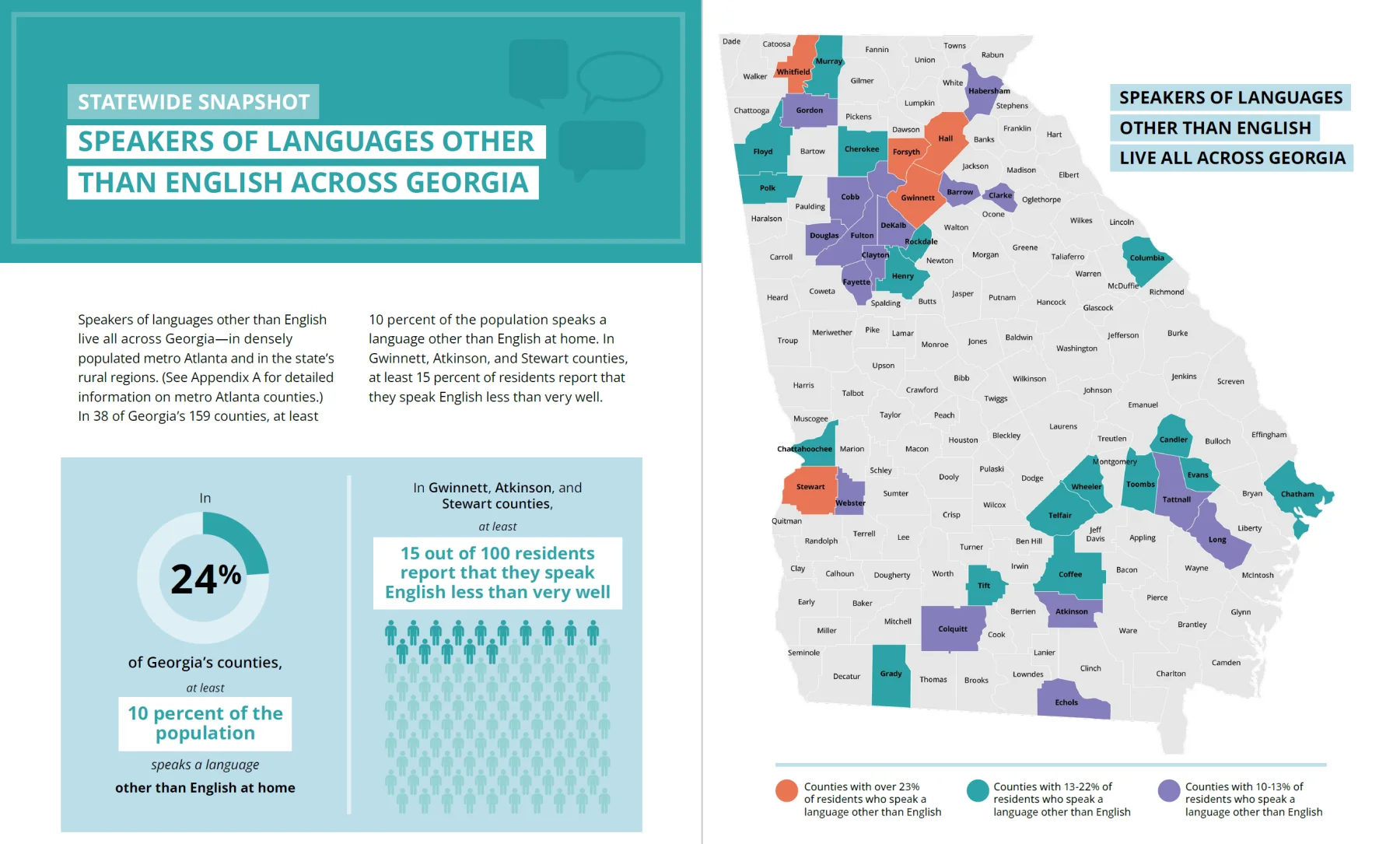
In 24% of Georgia counties, at least 10% of the population speak a language other than English at homeImage

Asian Americans Advancing Justice-Atlanta recently published a “Linguistic Diversity in Georgia” report detailing data and recommendations to better serve Georgia’s diverse populations.

  • Georgia’s linguistically diverse population is not exclusively concentrated in the state’s most populous counties.
  • More than 800,000 Georgians speak Spanish, making up 8 percent of Georgia’s total population.
  • To account for gaps in available Census data, stakeholders should look to other sources, such as school data, for more detailed data about languages spoken in a given jurisdiction.
  • Language access and linguistic representation is important even to those who self-report as speaking English “very well.”
August 1, 2022 / Civic Engagement, Equity

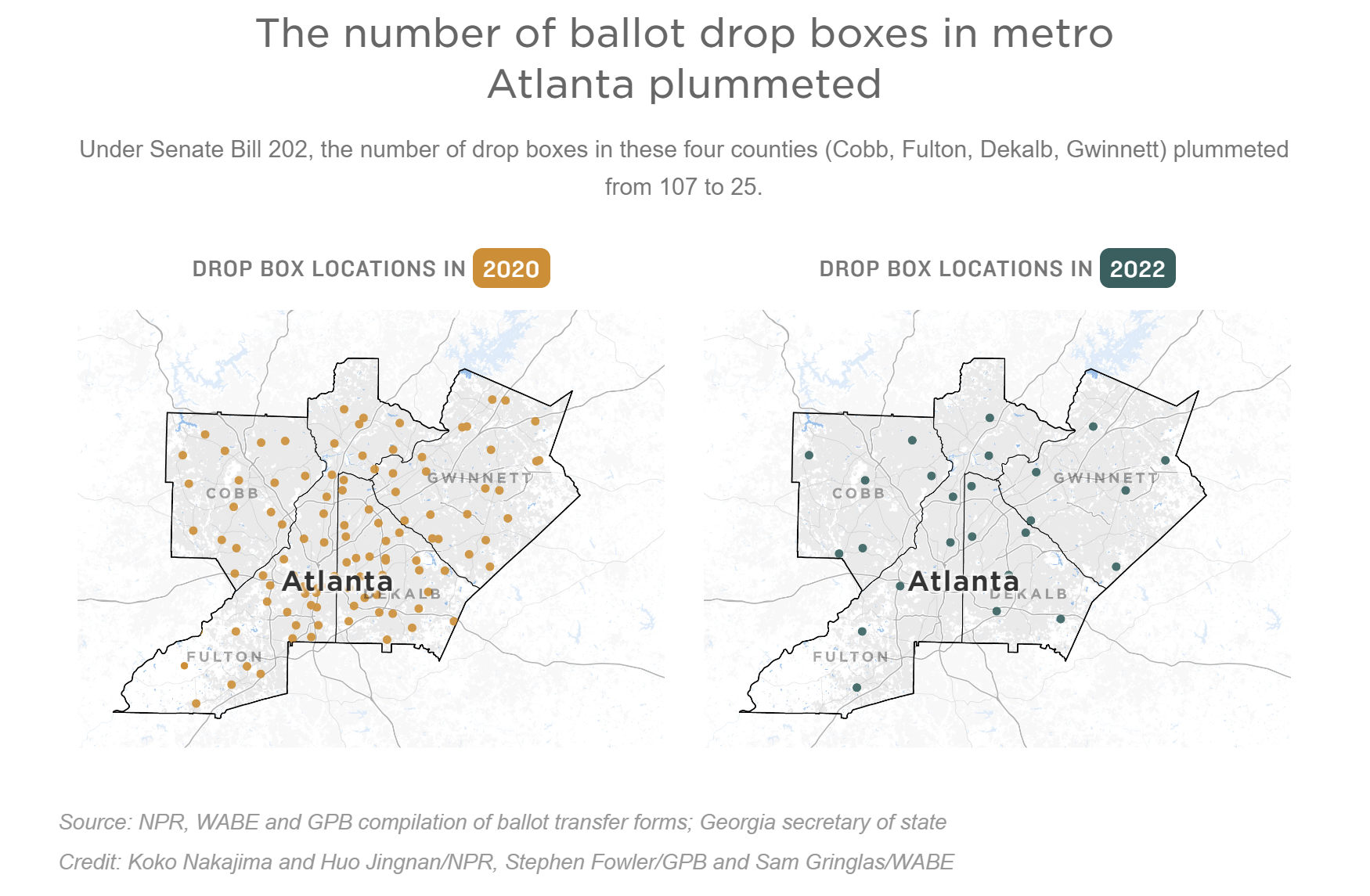
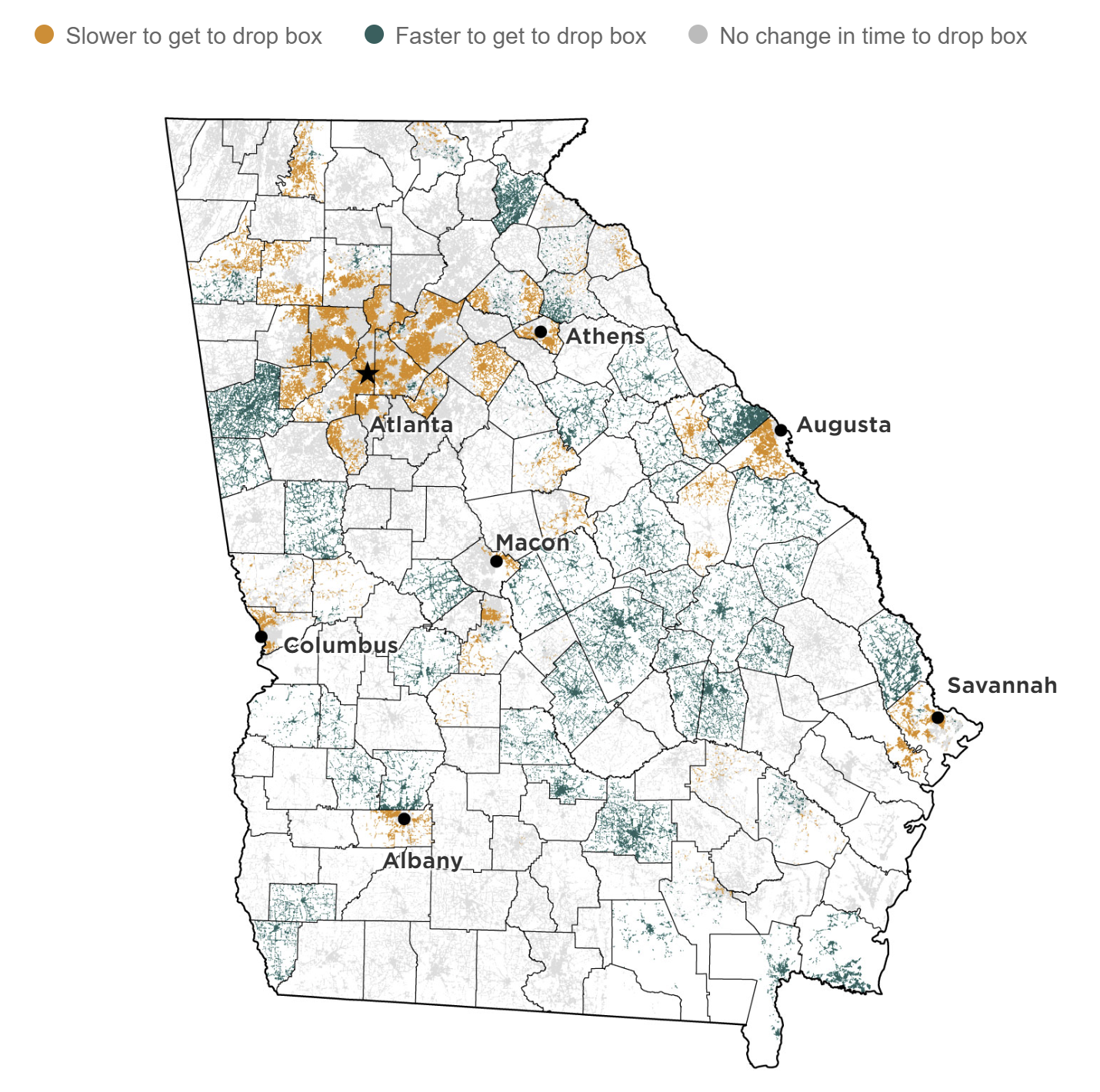
Disappearing ballot drop boxes decrease voting accessibilityGallery

A new WABE and GPB analyzes the impacts of the newly enacted law (SB 202) that affects the number and location of ballot boxes across the state. The finding point to disparate outcomes, including:

  • More than half of the roughly 550,000 voters who cast their ballot using a drop box in the state’s 2020 general election lived in four metro Atlanta counties — Cobb, DeKalb, Fulton and Gwinnett — where about 50% of the voters are people of color.

  • Under the new law, the number of drop boxes in these four counties plummeted from 107 to 25.

  • Nearly 1.9 million people, a quarter of the state’s voters, have seen their travel time to a drop box increase from the 2020 election.

  • More than 90% of voters who saw an increase in their travel time to a drop box live in cities or suburbs, which are home to most of the state’s minority voters and vote heavily Democratic.

October 2, 2020 / Basic Needs, Civic Engagement, Hispanic, Immigration

Quote

Among immigrant-serving organizations, civic engagement focuses during and beyond the pandemic include: (1) supporting the wellbeing of community leaders and volunteer-led organizations, (2) strengthening community networks for mutual aid, (3) civic education, including redistricting, (4) ensuring comprehensive and standard language access policies for all Georgia districts. (LCF)

Stay up-to-date-with the latest insights.

Receive monthly newsletters from Neighborhood Nexus, as well as occasional updates and events.

Neighborhood Nexus

Neighborhood Nexus is a regional information system, providing data, tools and expertise as a catalyst to create more equitable and livable communities for all of the region’s citizens. Our mission is to build a culture of data-informed decision-making among Georgia’s social sector.

More About Us
  • About
  • Core Partners
  • Team
  • Advisory Board
  • Privacy Policy
  • phone 470-378-1601
  • envelope info@neighborhoodnexus.org
  • facebook
  • twitter
  • linkedin
© 2026 Neighborhood Nexus. All Rights Reserved. | Neighborhood Nexus c/o Mercy Care, 424 Decatur St. SE, Atlanta, GA 30312
Print
Email LinkedIn Facebook Google Twitter Reddit Pinterest Print