December 17, 2025 / Commuting, Safety

Traffic Deaths Now Exceed Homicides Across Metro Atlanta’s Core CountiesImage

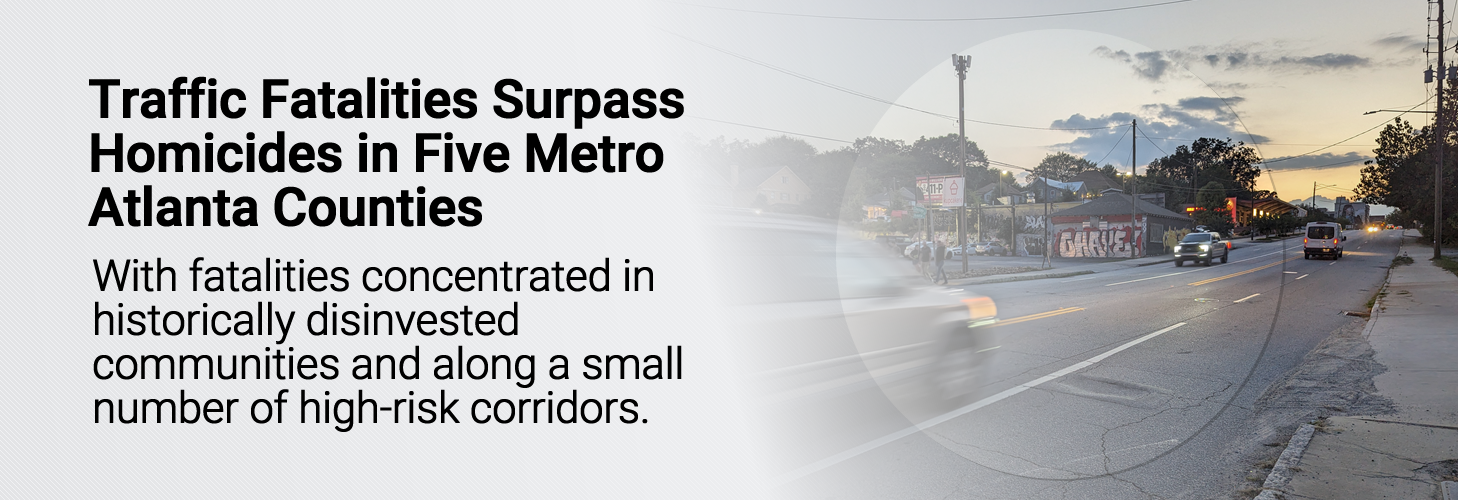
A new story map, The Human Cost of Mobility: 2024, reveals that traffic crashes have become one of the deadliest—and least visible—public safety crises in Metro Atlanta. Across five core counties, roadway deaths now surpass homicides, with fatalities concentrated in historically disinvested communities and along a small number of high-risk corridors, underscoring how transportation policy choices continue to shape who is most at risk.

Key takeaways:

  • In 2024, traffic crashes killed 425 people across Clayton, Cobb, DeKalb, Fulton, and Gwinnett counties—more than the 410+ homicides recorded in the same area.
  • Traffic deaths are deeply inequitable: predominantly Black neighborhoods make up 43% of census tracts but account for more than 61% of all traffic fatalities.
  • A small share of infrastructure drives a large share of harm: just 1.2% of roadways account for nearly 11% of fatal crashes across the five-county region.

Read the full report here.
April 28, 2025 / Commuting, Workforce

Long Commutes, Lower Pay: Georgia to #1 in Workplace StressImage

A study measuring workplace stress across the U.S. ranked Georgia as the most stressful state to work in, based on data from the Bureau of Labor Statistics, the CDC, and other federal sources. Researchers from Innerbody Labs assessed factors like employment challenges, income decline, long commutes, and limited work flexibility. Georgia’s rise from 18th to 1st highlights growing financial and commuting strains impacting workers across the state.

Key Takeaways:

  • Georgia now ranks #1 for workplace stress, jumping from 18th place in one year.

  • Worker incomes have declined, with Georgia seeing a 0.52% drop in average weekly earnings.

  • Long commutes are a major issue, averaging 28–29 minutes across the state.

  • Few workers walk or bike to work, increasing transportation-related stress.

  • Southern states dominate the most stressful rankings, with Alabama and Tennessee close behind.

Read their full post here.

April 27, 2024 / Commuting

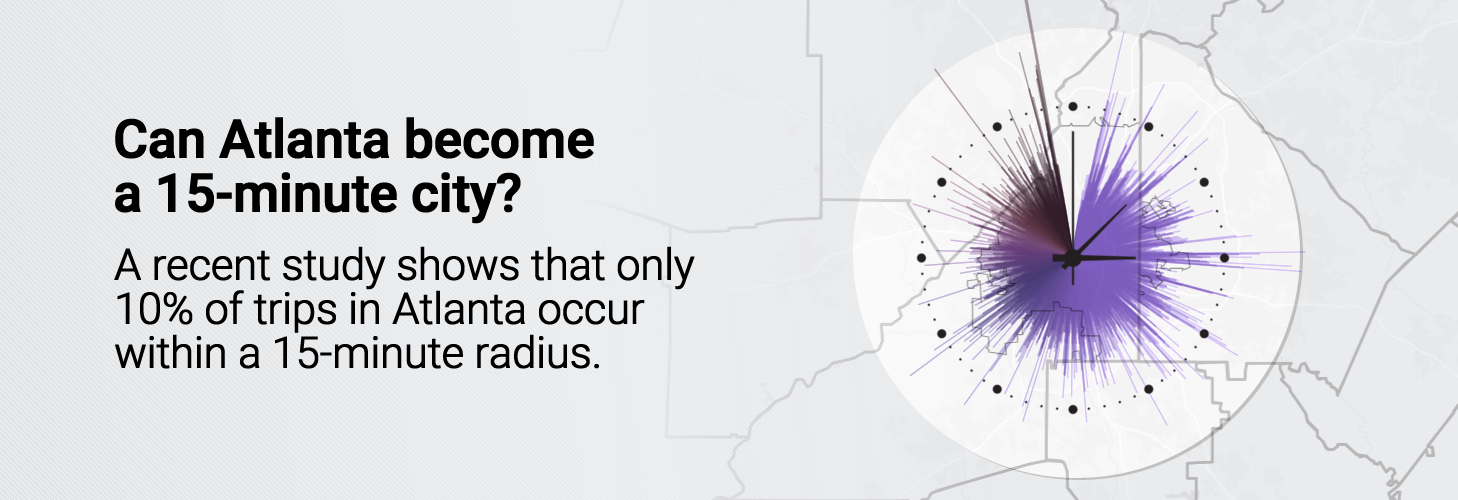
Only 10% of trips in Atlanta occur within a 15-minute radiusImage

Recently, a group of researchers published a study analyzing mobile-phone location data for 40 million Americans, measuring how often a neighborhood’s residents carry out essential trips within a quarter-hour radius.

The general results show that the median resident makes only 14% of their consumption trips within a 15-minute walking radius.

The study offers insights by region and state across the country. In Atlanta, only 10% of trips occur within a 15-minute radius.

Read more about the study here.

November 28, 2023 / Commuting, Equity

Propel ATL’s ’38 Reasons Why’ report on 2022 pedestrian deaths within the city limitsImage

The new report, “38 Reasons Why,” published by Propel ATL, analyzes the 38 pedestrian deaths reported within city limits in 2022, the last year for which complete data is available.

Key takeaways:

  • The 38 pedestrian deaths in 2022 represent an increase of 23% over 2021 and 52% over 2020.
  • Over two-thirds of pedestrian fatalities occurred in majority-Black neighborhoods (25 out of 38 fatalities).
  • 63% of pedestrian fatalities occurred on roadways that didn’t have sidewalks, and 38% of bicycle and pedestrian crashes occurred on state routes that tend to lack sidewalks and bike lanes.
  • 29% of bicycle and pedestrian crashes were hit-and-runs.

“These trends highlight a glaring disparity in Atlanta’s pedestrian safety: People walking in Black neighborhoods or in low-income communities are more likely to lose their lives to traffic violence. These same neighborhoods also tend to have fewer roadway features like sidewalks, crosswalks, and bike lanes that keep people safe when traveling outside of cars”, the report says.

See the full Story Map here.

March 24, 2023 / Commuting, Workforce

Trend alert: Having a formal remote work policy.Image

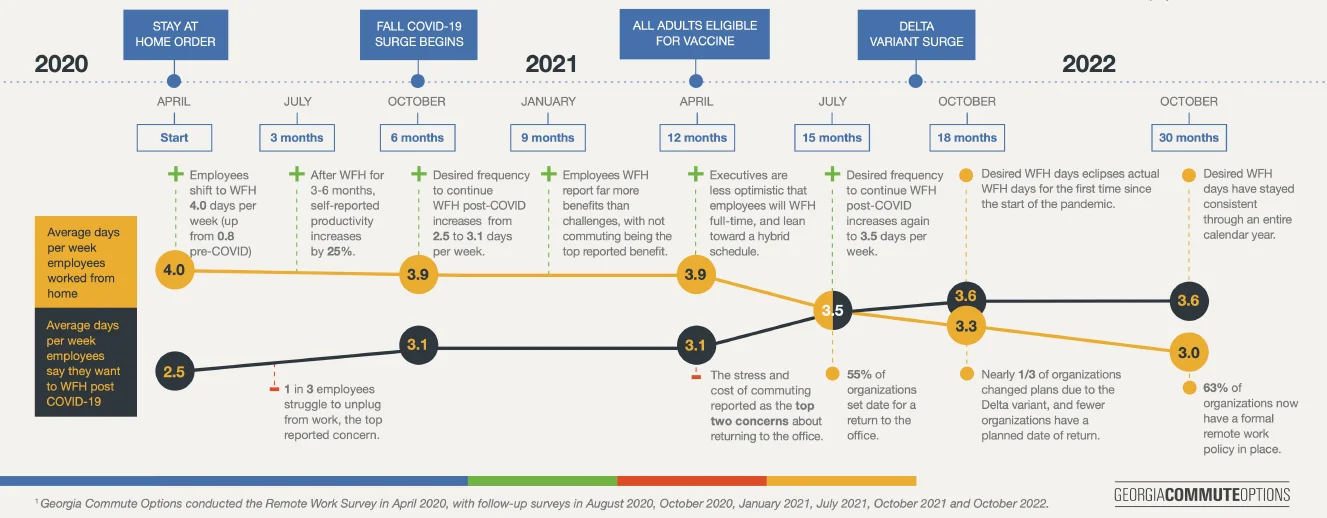
Georgia Commute Options (GCO) shared the results of their latest Remote Work Survey with three key findings:

  1. There is a strong demand for a hybrid, flexible future: employees prefer to work from home, on average, 3.6 days per week.
  2. Commuting is a top barrier for in-office work: two-thirds of respondents reported their commute as a key factor impacting their willingness to go into the office.
  3. Return-to-office plans are becoming clearer: 63% of organizations now have a formal remote work policy.

See how employees’ and employers’ preferences have changed over the last 2.5 years and more information about commute trends on GCO’s website.